Dental implants in Brazil for international patients.
I am an implant dentist in Florianópolis, Brazil, and I treat international patients who need a single implant, full-arch rehabilitation or a complex implant case. Everything begins with a remote review of your records, so you understand your options before you decide to travel.
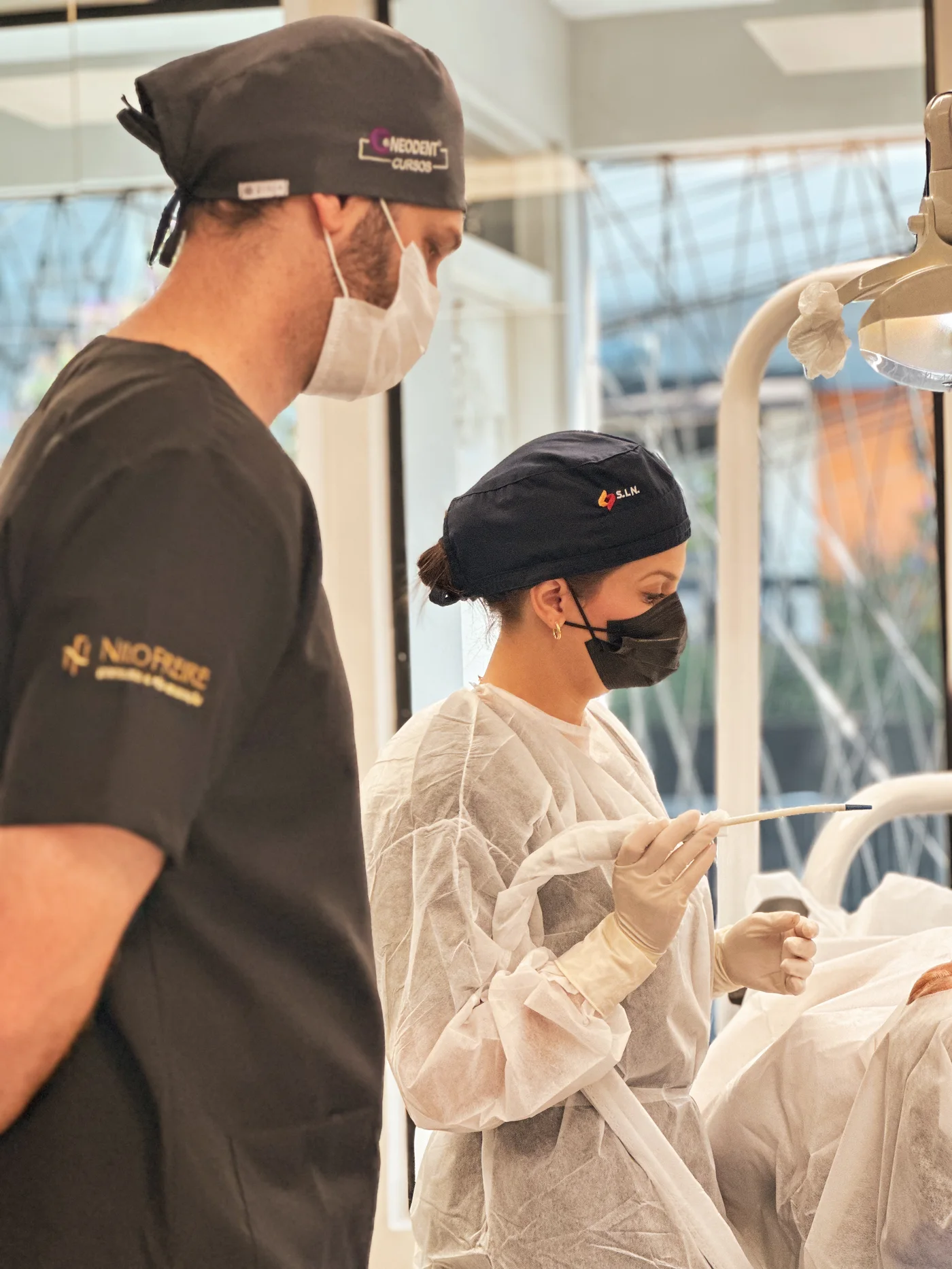
Who may benefit from an initial evaluation.
An initial evaluation helps you understand your options. It is not a commitment to treatment, and it does not replace an in-person clinical exam.
- You are missing one tooth or several teeth and want to know whether implants are a realistic option for your case.
- You have lost most or all of the teeth in one or both jaws and are considering fixed, implant-supported teeth instead of a removable denture.
- You were told there is not enough bone for conventional implants and would like a second opinion on the alternatives that may apply.
- Your history is complex, for example earlier bone grafting or implant treatment that needs to be reassessed, and you want the case looked at as a whole.
- You live outside Brazil and want to understand what treatment would involve, including travel, before making any plans.
International patients seeking dental implants in Brazil usually start by sending what they already have, and that is enough for a first review. The patients page describes the full journey, from first contact to follow-up at home.
Dental implants in Florianópolis, Brazil: from one tooth to a full arch.
Which option applies depends on your bone, gums, bite and general health. It is decided case by case, never from a standard package.
Single and multiple implants
Replacing one tooth or several teeth with implant-supported crowns or bridges. Planning looks at the available bone, neighboring teeth and gums, your bite and the final restoration before any implant is placed.
Full-arch dental rehabilitation in Brazil
When most or all teeth in a jaw are missing, a fixed prosthesis can be supported by a limited number of implants. This is what people usually mean by full mouth dental implants in Brazil: one arch or both, restored with fixed teeth rather than a removable denture.
Complex dental implant cases in Brazil
Severely reduced bone, earlier treatments that need review, or combinations of techniques. These cases call for advanced implant dentistry and, at times, a full surgical team such as the Zygo Team.
You will probably come across the names All-on-4 and All-on-X while researching full-arch treatment. They are approaches to supporting a fixed arch on a small number of implants, and they are options, not a default. How many implants are used, and where they go, is set by your anatomy and your plan, not by the name of the protocol.
What can happen on the day of surgery.
When clinically indicated, a fixed provisional restoration may be delivered on the day of surgery. For suitable full-arch cases, patients may leave surgery with fixed temporary teeth while healing takes place.
Same-day temporary teeth are not appropriate for every case; the final decision follows clinical assessment and planning. It depends on factors such as:
- the stability of the implants once they are placed;
- the condition and amount of your bone;
- the prosthetic plan for your bite and the final teeth;
- your general health and other clinical factors found at the in-person exam.
The final prosthesis is planned after the appropriate healing and clinical follow-up period. It is a separate, later stage, and it is not made on the day of surgery.
Zygomatic implants in Brazil: when they may be considered.
Zygomatic implants are longer implants anchored in the cheekbone (the zygomatic bone) rather than relying only on the upper jaw. They may be considered when the upper jaw has lost so much bone that conventional implants are not feasible, or, in selected cases, as an alternative to extensive bone grafting. Read the full guide to zygomatic implants.
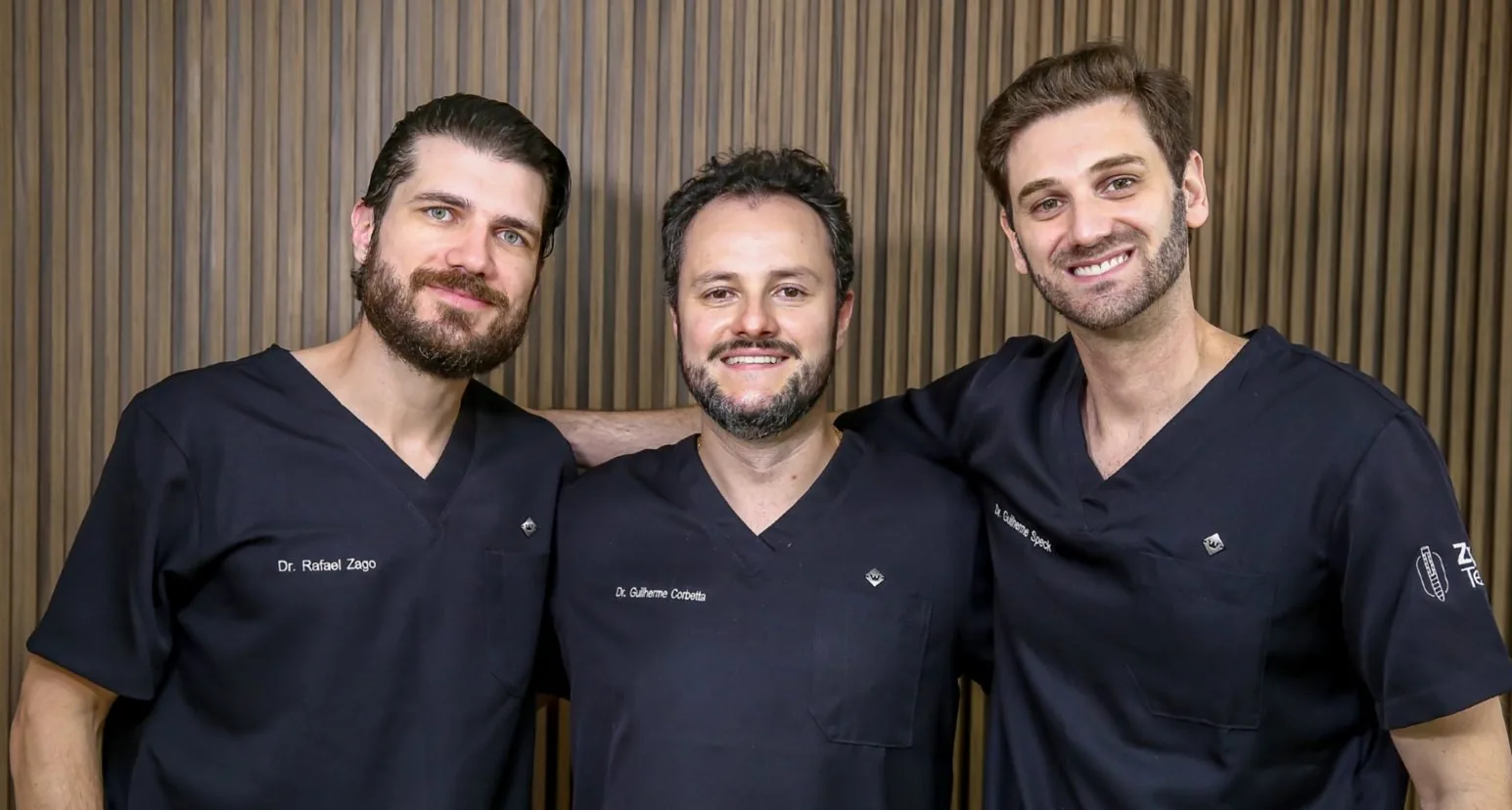
They are not a first choice. When there is enough bone, conventional implants are usually preferred, and zygomatic surgery is a more complex procedure that needs careful planning, imaging and an in-person assessment. I treat these cases together with the Zygo Team, a group of three implant surgeons who work on full-arch and zygomatic cases as a team.
Remote dental implant evaluation for international patients.
Dental treatment in Brazil starts before you travel, with a review of your records from wherever you are.
Send what you have
A recent CT scan (CBCT), a panoramic X-ray, or simply photos and a short description of your situation. You can start without exams.
Personal review
I review your case myself and reply with a preliminary opinion: whether treatment looks appropriate, what it would generally involve, and whether more information is needed.
Decide before you book
No trip is planned until we both agree that the proposed treatment makes sense for you.
A first message can be short. It helps to mention where you live, which teeth are missing or what kind of prosthesis you wear now, what bothers you most, and what other dentists have told you so far.
Digital planning first, in-person assessment before surgery.
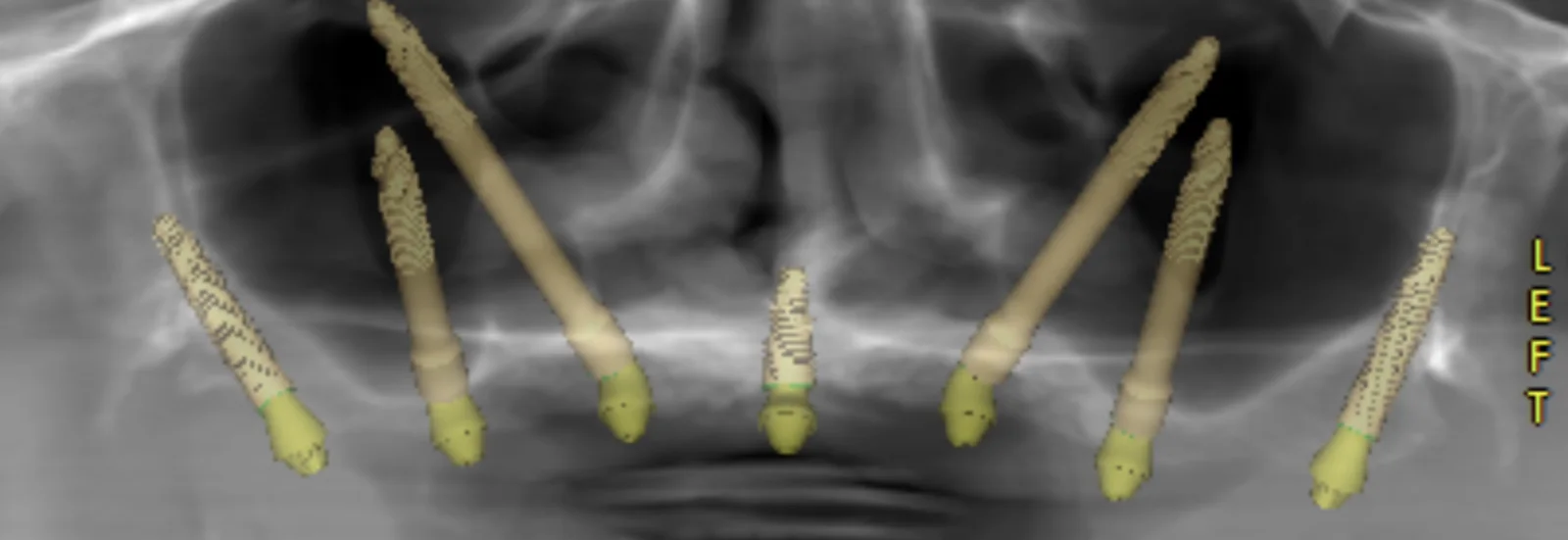
When imaging is available, your case is planned digitally: CBCT data and, when needed, digital scans are combined to place implants around the planned teeth, and surgical guides can be 3D-printed when they are indicated. It is the same workflow described on the digital implant planning page, which is written for referring dentists.
A plan on screen does not replace the clinical exam. When you arrive in Florianópolis, an in-person assessment confirms or adjusts the plan before any procedure is performed.
Length of stay, and whether you may need more than one trip.
Some cases can be completed in a single visit. Others call for a longer stay or for a second trip, for example to deliver the final prosthesis after healing. There is no standard answer; it follows from your diagnosis and your plan.
- Your personalized treatment outline states the estimated length of stay and whether a follow-up trip may be needed.
- Before you leave Florianópolis, we review your recovery and agree how follow-up will be handled once you are home.
- Where possible, the implant system chosen has an established presence in your country, to support care with a local dentist.
Costs, what is included and the travel arrangements are covered in your outline after the initial evaluation. You can read the step-by-step journey, the estimate and the after-care planning on the patients page.

Florianópolis as the place for your treatment.
All in-person care takes place in Florianópolis, an island city in southern Brazil with its own international airport (FLN). Surgery is performed in a surgical-center setting, with basic life support equipment and monitoring throughout.
The patients page shows the operating-room setup and describes the city and the areas where many visitors stay.
Your implant dentist in Florianópolis, Brazil.
I am Dr. Guilherme Lobo Speck (CRO-SC 13913). I graduated in dentistry from the Federal University of Santa Catarina (UFSC), hold a specialization in Implant Dentistry and advanced surgical training, and I am a doctoral candidate in Implant Dentistry at ILAPEO. My daily work combines advanced implant dentistry in Brazil, a digital workflow, teaching and research.
I personally review each international case that reaches me, and I am the dentist who evaluates, plans and performs the treatment. My career page details my education, teaching and research, and the Zygo Team page introduces the surgical team I work with on full-arch and zygomatic cases.
Questions about implant treatment in Brazil.
Can international patients get dental implants in Brazil?
Yes. International patients can be evaluated remotely first and then treated in person in Florianópolis. Treatment is confirmed only after a clinical exam in person, and the plan is built around your clinical needs and your travel timing.
What is the difference between All-on-4 and All-on-X dental implants in Brazil?
All-on-4 is a protocol that supports a fixed prosthesis on four implants in one jaw, usually with the back two tilted. All-on-X is a broader way of describing the same idea, with a number of implants, such as four, five, six or more, chosen for the case. Which approach is suitable depends on your bone, anatomy, bite and the planned prosthesis.
Can I leave with teeth on the day of surgery?
For suitable full-arch cases, patients may leave surgery with fixed temporary teeth while healing takes place. When clinically indicated, a fixed provisional restoration may be delivered on the day of surgery. Same-day temporary teeth are not appropriate for every case; the final decision follows clinical assessment and planning.
Is the final prosthesis made at the same time?
No. The final prosthesis is planned after the appropriate healing and clinical follow-up period. Until then, a provisional restoration may be used when it is clinically indicated.
When are zygomatic implants considered?
Mainly when the upper jaw has lost too much bone for conventional implants, or, in selected cases, as an alternative to extensive bone grafting. When there is enough bone, conventional implants are usually preferred. The decision needs imaging and an in-person assessment.
How reliable is a remote evaluation?
It is a first opinion based on your scans, photos and description. It helps decide whether it makes sense to go further, but it is not a diagnosis. The clinical exam in person confirms the plan, and the plan can change after it.
When should I book flights?
After the remote review and once we agree that the proposed treatment suits your case. Your outline then states the estimated length of stay and whether a second trip may be needed.
Is this "dental tourism in Brazil for implant treatment"?
Some people describe treatment abroad that way when they search for it. I prefer to think of it as planned, clinically led care: your case is reviewed first, the treatment is confirmed in person, and travel is organized around the clinical plan rather than the other way around. The choice of professional matters more than the choice of country.
Which languages do you offer care in?
Care is offered in English or Spanish, in addition to Portuguese.
Request an initial evaluation.
Send a short message and I will reply personally with next steps, including which exams, if any, would help complete your evaluation.
Exams are not needed to start. Prefer iMessage? Text +55 48 99185-1662.